
For furniture manufacturers and edge banding buyers, achieving a seamless color match between the edge banding and the decorative board is essential to producing a high-quality finish. After trimming on an edge banding machine, the edge banding should blend naturally with the board surface, without leaving any visible color differences.
Recently, an Australian furniture manufacturer contacted us about a problem with their existing edge banding. After application and trimming, a noticeable white line appeared along the edges, affecting the overall appearance of the finished furniture.
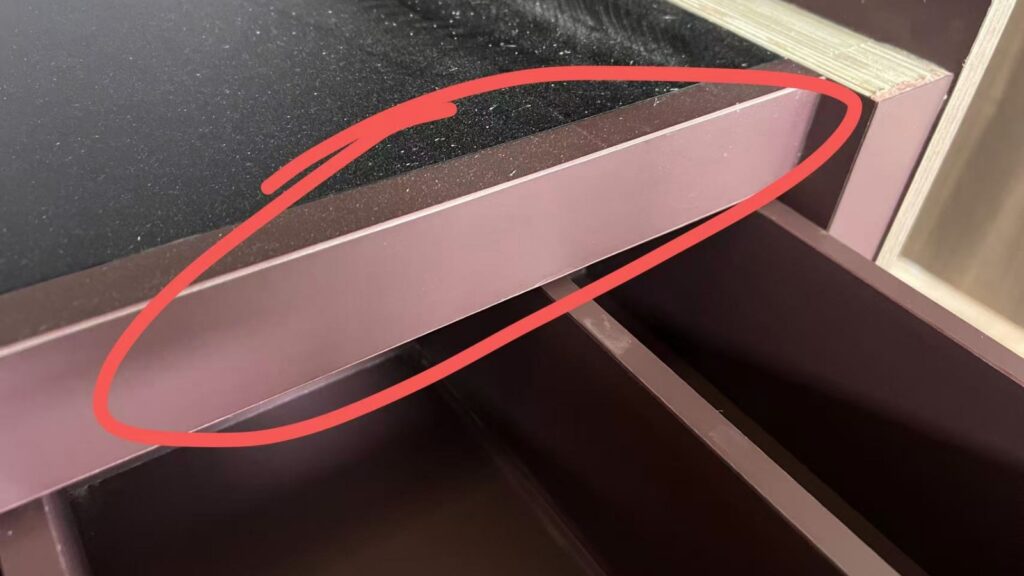
The customer was looking for edge banding with consistent color throughout its thickness, so that the inner material would match the outer surface even after trimming. After understanding their requirements, our factory provided a suitable edge banding solution to address the issue.
In this article, we’ll explain why white lines appear along the edges of furniture boards, what causes this problem, and how to choose PVC edge banding with consistent color throughout the material.
Why Do White Lines Appear Along the Edges of Furniture Boards?
White lines or whitening marks along the edges of furniture boards can occur for several reasons. Common causes include excessive calcium carbonate in the PVC edge banding, improper trimming by the edge banding machine, or irregularities in the board itself.
The quality and material composition of the PVC edge banding also play an important role. Some manufacturers add excessive amounts of calcium carbonate to their PVC formulations to reduce production costs. Since calcium carbonate is naturally white, a high filler content can affect the material’s flexibility and color consistency. When the edge banding is bent, folded, or trimmed, white marks may become visible, particularly along the edges and folding points.
Choosing PVC edge banding with a well-balanced formulation and sufficient PVC content can help reduce this problem and achieve a cleaner, more consistent finish.
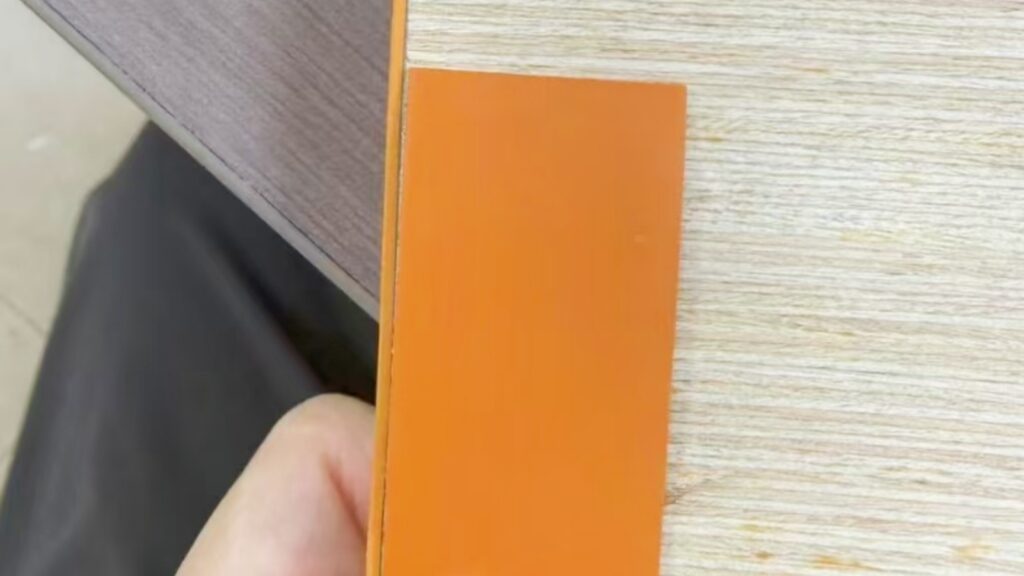
What are color-matched PVC edge bands?
PVC edge banding features consistent color, presenting a uniform appearance from the outer surface through to the inner material. This means that the color remains consistent even when the strip is bent, folded, or trimmed during the edge banding process.
This feature is particularly important for soft-forming applications, where the edge banding needs to bend around curved or rounded board edges. If the material contains too much filler or has poor flexibility, whitening marks may appear at the folding points, affecting the finished appearance.
A simple way to check the flexibility and whitening resistance of PVC edge banding is to perform a repeated folding test:
- Take a sample of the PVC edge banding strip.
- Fold it approximately 90 degrees in one direction and then bend it back.
- Repeat this process 3–5 times.
- Check the folded area for visible whitening marks, cracks, or obvious creases.
High-quality PVC edge banding with a well-balanced material formulation should maintain good flexibility and show minimal whitening or surface damage after repeated folding.
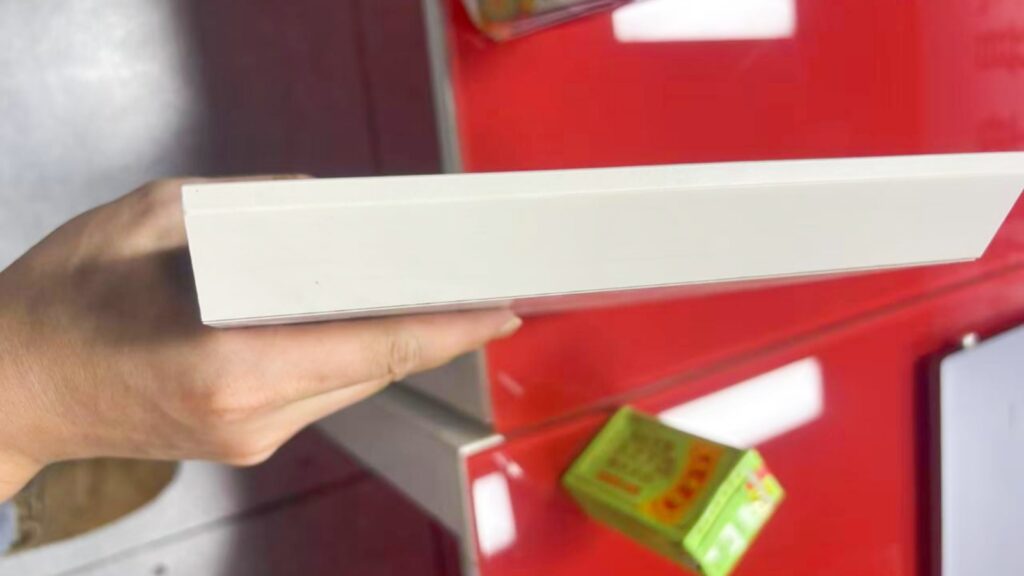
This simple test can help furniture manufacturers and edge banding buyers evaluate the material’s flexibility and appearance before placing a bulk order.
Where Can You Buy PVC Edge Banding with Consistent Color on Both Sides?
For furniture manufacturers, especially those producing high-end furniture, color consistency is essential to achieving a clean and professional finish. Using PVC edge banding with consistent color on both the front and back surfaces helps reduce visible color differences after trimming, bending, and edge application, resulting in a more uniform appearance.
If you are looking for a reliable supplier of high-quality PVC edge banding, Foshan Shengmei Decorative Materials Co., Ltd. is worth considering.
With over 15 years of experience in edge banding manufacturing, we focus on producing PVC edge banding with stable color, consistent material quality, and good flexibility. Our products are designed to minimize whitening marks and visible color differences during edge banding, helping furniture manufacturers achieve a cleaner finish.
Whether you are sourcing PVC edge banding for standard furniture production or high-end furniture projects, we can provide customized colors, patterns, thicknesses, and widths to meet your requirements.
Contact us to discuss your edge banding requirements or request samples for testing.