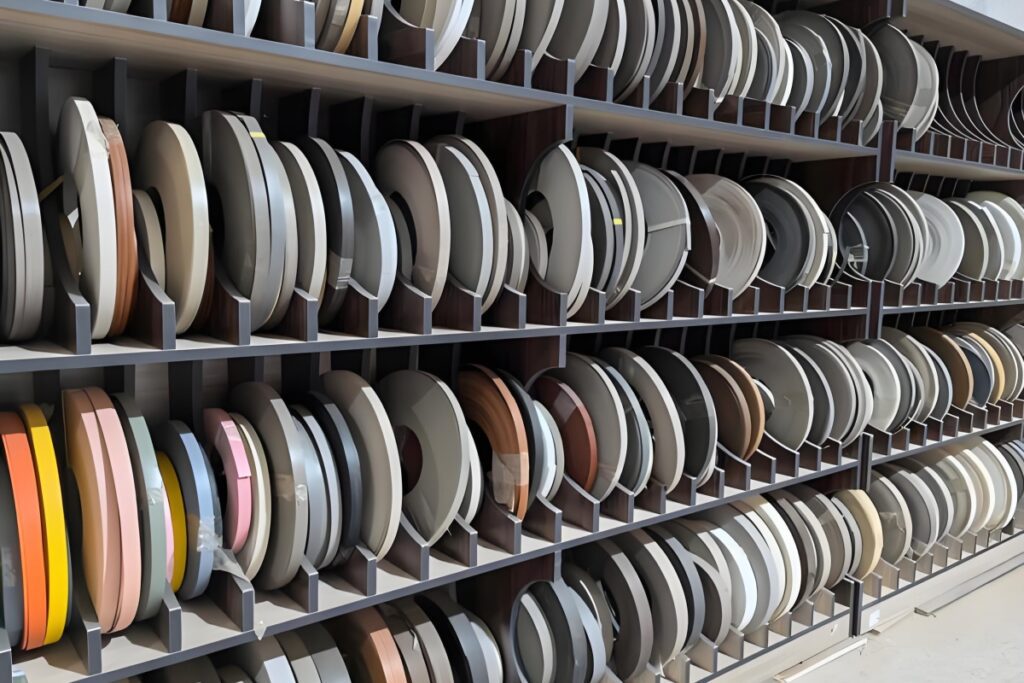
As an edge banding manufacturer with over 15 years of industry experience, we often hear customers ask how we ensure that the finished products match our color samples. Color consistency is an important part of PVC edge banding quality control. Even a slight color difference between the edge banding and the decorative board can affect the overall appearance of cabinets, wardrobes, and doors. In more serious cases, it may lead to customer complaints, product returns, or costly rework.
For edge banding importers, distributors, and furniture manufacturers, consistent color matching is essential to maintaining product quality and customer satisfaction. It also helps reduce unnecessary losses and avoid problems during furniture production.
In this article, we will explain two common methods used by edge banding manufacturers to detect color differences and maintain consistent colors between samples and finished products, based on our experience in PVC edge banding production.
What are the common methods for detecting color differences in edge banding?
The two most common methods for checking color differences in PVC edge banding are visual inspection and instrument-based measurement using a colorimeter or spectrophotometer.
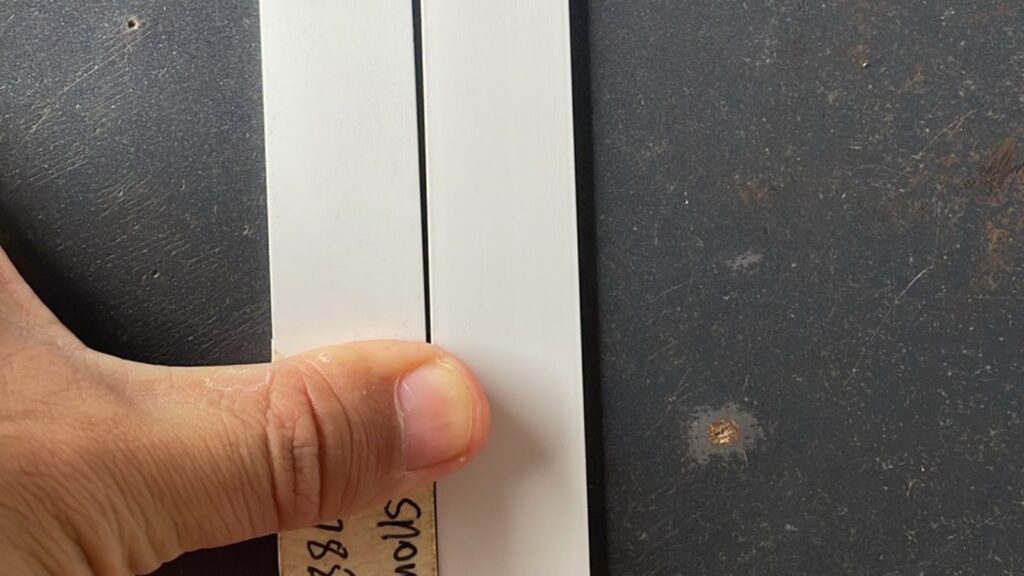
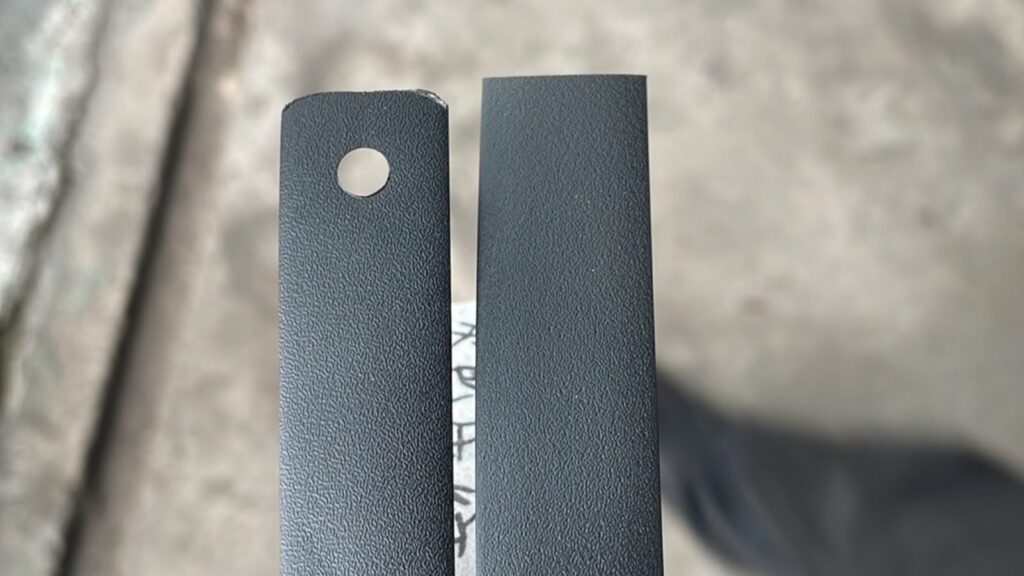
Visual inspection involves comparing the color of the finished edge banding with an approved reference sample using the naked eye. It is quick, simple, and practical, especially when checking whether the edge banding matches a decorative board. However, the results can be affected by lighting conditions, the background, surface gloss, and the observer’s perception of color.
Color measurement uses a colorimeter or spectrophotometer to measure color differences and provide numerical data. This method is more objective and repeatable, making it useful for quality control, production records, and comparisons between different production batches. However, instrument readings do not tell the whole story. Visual inspection is still necessary to assess how the colors look under actual viewing conditions.
How to check edge banding color differences by visual inspection?
To carry out a visual color comparison, place the approved reference sample and the newly produced edge banding side by side. Compare them under consistent lighting and look for differences in hue, brightness, and color saturation. For a more reliable result, the samples should be viewed from approximately a 45-degree angle, with slight adjustments to the viewing angle when necessary.
Although visual inspection is straightforward, several details can affect the results:
- Use an approved reference sample. Make sure the standard sample has been confirmed by the customer before mass production begins.
- Choose a neutral background. A neutral gray background helps reduce the influence of surrounding colors during comparison.
- Use consistent lighting. Avoid yellow office lights or mixed lighting conditions, as they can make the same color look different.
- Keep the viewing conditions consistent. Compare both samples side by side under the same lighting and viewing angle. Slightly changing the angle can also help reveal differences in gloss or surface texture.
For PVC edge banding manufacturers, visual inspection is a useful first step in checking color consistency. However, when producing large orders or matching multiple colors, it is better to combine visual checks with instrument-based color measurement.
How to use a colorimeter to measure color differences in edge banding?
A colorimeter or spectrophotometer provides a more objective way to check color consistency during PVC edge banding production.
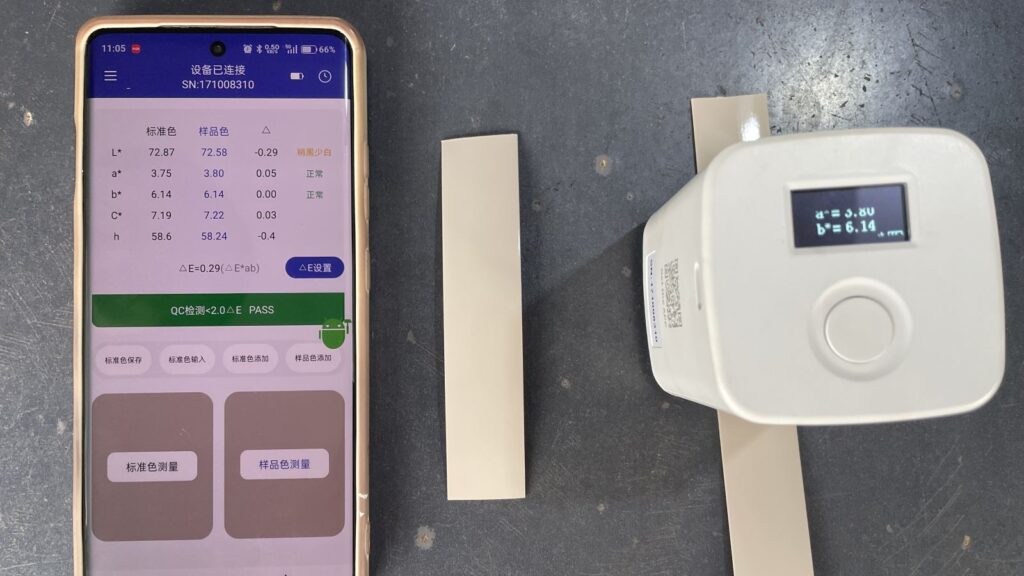
First, measure the approved reference sample according to the instrument’s operating instructions. Then measure the newly produced edge banding under the same conditions. The instrument calculates the color difference between the two samples, usually expressed as ΔE.
A lower ΔE value generally indicates a smaller measured color difference. Many instruments also provide L*, a*, and b* readings, which help identify the type of color variation:
- L* represents lightness, from black to white.
- a* represents the green-to-red color axis.
- b* represents the blue-to-yellow color axis.
By recording these values for approved samples, manufacturers can compare future production batches against the same color reference. This makes it easier to identify color deviations early and maintain more consistent results across repeat orders.
What Is an acceptable ΔE value for edge banding?
There is no single ΔE limit that applies to every PVC edge banding product. The acceptable color difference depends on the color itself, surface gloss, texture, measurement conditions, and the customer’s quality requirements.
As a general reference, a ΔE value below 1.5 may be suitable for some standard furniture applications. For high-end furniture or projects requiring close color matching, buyers may specify a tighter limit, such as below 1.0 or even 0.5.
These figures should be treated as general guidelines rather than universal industry standards. The actual acceptance limit should be agreed upon by the supplier and customer before production. It is also important to use the same measurement method and settings when comparing results, as different instruments and ΔE calculation formulas can produce different readings.
For this reason, we recommend combining spectrophotometer measurements with visual inspection under consistent lighting. This approach helps edge banding manufacturers control color variation more effectively and gives importers, distributors, and furniture manufacturers greater confidence in the consistency of their orders.
Common mistakes when checking color differences in edge banding
Even with the right inspection methods, small mistakes can affect the accuracy of color matching. When checking PVC edge banding, manufacturers should avoid the following common problems:
- Using inconsistent lighting. Standard office lighting can distort how colors appear. Use consistent lighting conditions, such as a D65 light source or suitable natural daylight, whenever possible.
- Relying on photos for color approval. Photos taken with a mobile phone can look different depending on the camera, screen settings, and surrounding light. They are useful for initial communication but should not be the only basis for accepting or rejecting a color match.
- Checking samples before they have cooled. Freshly produced edge banding may look different from the finished product after cooling. Allow the material to reach room temperature before making the final comparison.
- Using outdated or unapproved reference samples. Samples that have faded or changed during storage may no longer represent the customer’s approved color. Always check against a confirmed reference sample.
- Failing to keep inspection records. Record the production batch number, color measurement results, and inspection date. These details make it easier to trace color variations and maintain consistency in future orders.
Following these practices helps reduce inspection errors and makes color quality control more reliable, especially when producing multiple colors or repeat orders.
How do color differences in edge banding affect furniture quality?
PVC edge banding does more than cover the exposed edges of furniture panels. It also needs to match the color and appearance of the decorative surface to create a clean, consistent finish.
When the edge banding has a noticeable color difference from the board, the finished cabinet, wardrobe, or door may look mismatched. Even if the edge banding meets the required dimensions and bonding standards, poor color matching can still affect the overall appearance of the furniture.
For furniture manufacturers, these problems can lead to customer complaints, additional sorting, rework, and product returns. They may also increase production costs and affect the company’s reputation, particularly when supplying projects that require consistent colors across large quantities of furniture.
For importers and distributors, inconsistent color quality can create similar problems when supplying multiple furniture manufacturers or fulfilling repeat orders. Choosing an edge banding supplier with reliable color control is therefore an important part of managing product quality and reducing unnecessary costs.
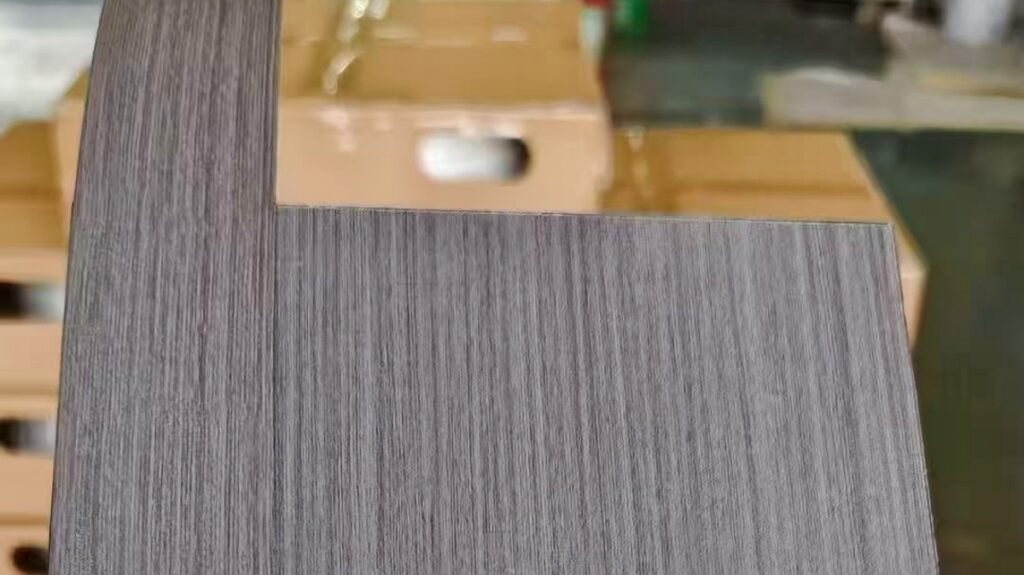
Choose an edge banding manufacturer that takes color consistency seriously
At Foshan Shengmei Decoration Materials Co., Ltd., we understand how important accurate color matching is to furniture manufacturers, importers, and distributors. We use a combination of visual inspection and spectrophotometer measurements to check color consistency at key stages of production, including before mass production and before shipment.
By comparing finished PVC edge banding with approved color references, we aim to reduce noticeable color variations and deliver more consistent results across production batches.
If you are looking for a reliable PVC edge banding supplier, we welcome you to contact us for more information or request samples for evaluation. You can also send us samples of your decorative panels or edge banding so that our team can match them with the appropriate solution.