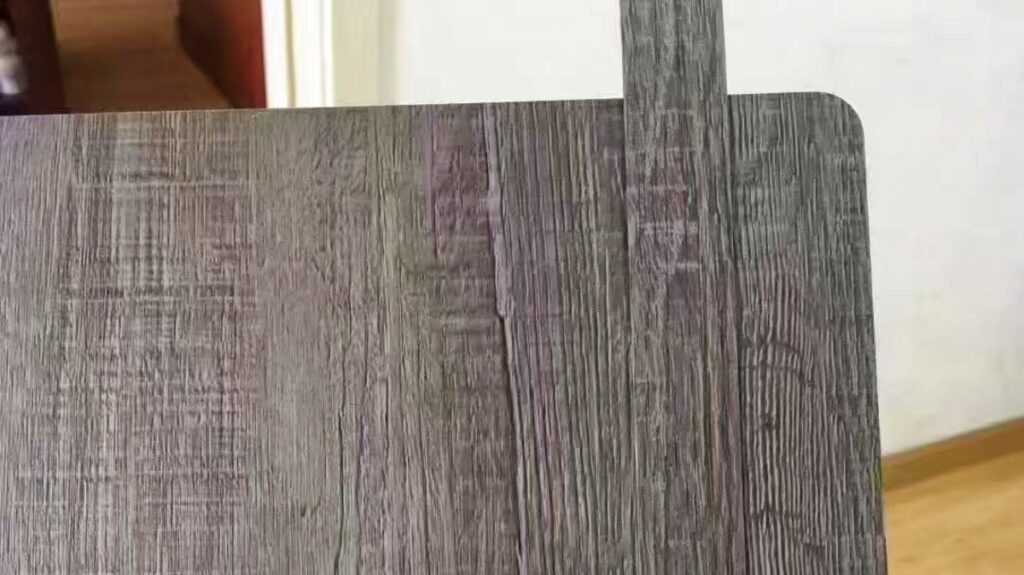
As an edge banding strip manufacturer, we frequently receive inquiries from customers such as:
“How do I choose the right edge banding strip for my boards?”,
“How can I prevent color differences between the boards and edge banding?”, and
“How does your factory match edge banding colors for customers?”
“How do you edge banding color match?”.
These are very common questions in furniture manufacturing and woodworking industries.
In this article, we will explain how we accurately match edge banding strips to customers’ boards, ensuring perfect color consistency, material compatibility, and a professional furniture finishing result.
1. Confirm the type of edge banding strip
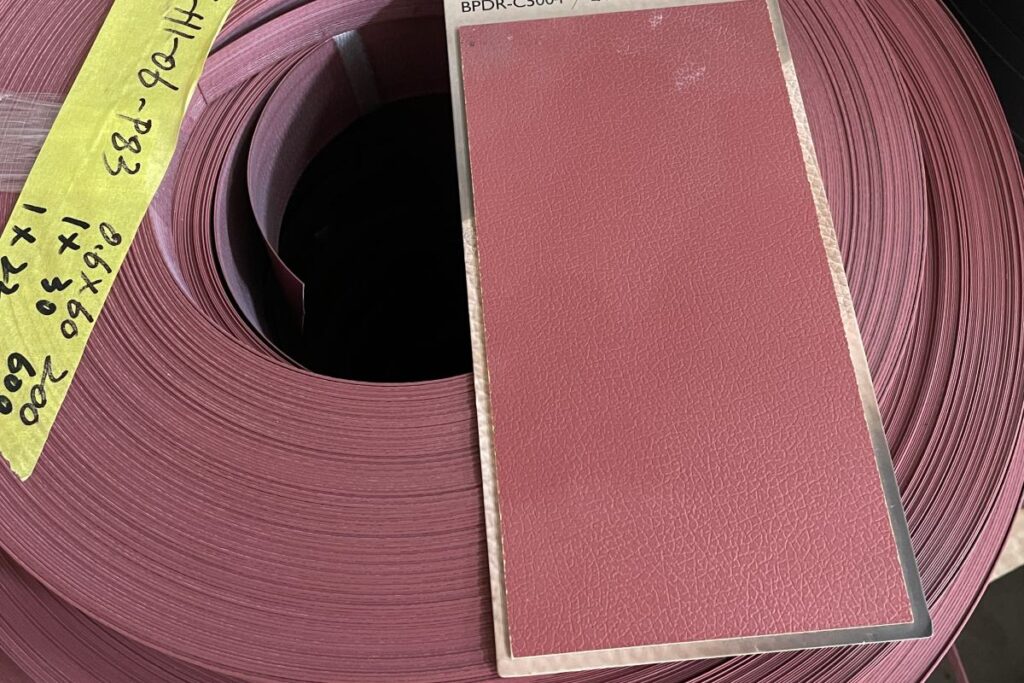
Before matching edge banding for a customer, it is essential to first confirm the edge banding type. This helps avoid color mismatch and ensures accurate material selection in the production process.
Common types of edge banding materials on the market include:
PVC Edge Banding
PVC edge banding is made from polyvinyl chloride (PVC) and is the most widely used edge banding material in the furniture industry.
It is known for its low cost, wide color selection, good flexibility, and strong resistance to wear and moisture. Because of these advantages, PVC edge banding is commonly used in mass production of panel furniture such as cabinets, wardrobes, and office furniture.
ABS Edge Banding
ABS edge banding is made from acrylonitrile butadiene styrene (ABS) copolymer. It is an eco-friendly, chlorine-free material that produces no harmful gases when burned.
Compared with PVC edge banding, ABS edge banding offers higher impact strength and better environmental performance. It is widely used in export furniture and high-end furniture applications where environmental standards are required.
PP Edge Banding
PP (polypropylene) edge banding is an environmentally friendly material with low density, high flexibility, and strong chemical resistance.
Due to its eco-friendly properties, PP edge banding is often used in furniture products with strict environmental requirements and in specific industrial applications.
Wood Edge Banding
Wood edge banding is made from natural solid wood veneer and provides a premium, natural wood grain appearance.
It delivers a high-end visual effect similar to solid wood furniture and is commonly used in custom furniture, luxury furniture, and interior decoration projects where aesthetics and natural texture are important.
2. Confirm the color and texture of edge banding strip
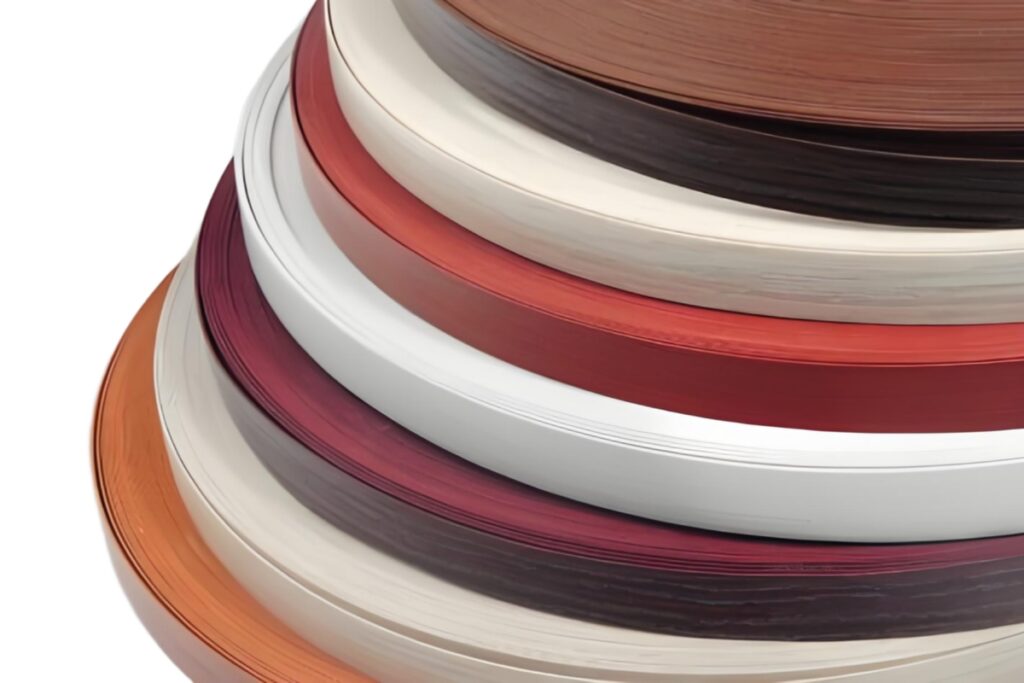
Color difference is one of the most common challenges in edge banding color matching for furniture manufacturing. For example, a color commonly referred to as “white” may actually include many different shades such as off-white, ivory white, pearl white, and more within a color chart system.
How to achieve a color match for edge banding is crucial.
Therefore, to achieve accurate edge banding color and texture matching, we typically use the following professional methods:
1. Matching Based on Board Material
We analyze the customer’s board material directly to ensure the edge banding strip matches the actual surface texture, color tone, and finish.
2. Matching Based on Customer-Supplied Edge Banding Sample
If customers provide an existing edge banding strip, we use it as a direct reference for the closest possible color and texture match.
3. Matching Based on Edge Banding Color Spectrum
We use our internal color spectrum system to identify the closest standard or custom color for accurate reproduction.
4. Matching Based on Color Charts (Pantone, LAURA, etc.)
We also support color matching based on international color standards such as Pantone or LAURA color charts to ensure global consistency.
Among all methods, matching based on the customer’s board material or physical edge banding sample provides the highest accuracy.
Our engineers carefully compare the color and texture of the edge banding under natural daylight and standardized lighting conditions to ensure a precise one-to-one color match. This process guarantees that the final edge banding strips achieve excellent color consistency and a seamless appearance when applied to furniture panels.
3. Confirm the edge banding strip specifications
After confirming the type, color, and texture of the edge banding strip, the next step is to determine the correct specifications, including width, thickness, and roll length. Accurate specification matching is essential for smooth production and high-quality furniture finishing.
Thickness Selection
Edge banding thickness is usually selected based on the furniture application and design requirements. A standard thickness is around 1mm, which is widely used in most furniture production.
Width Selection
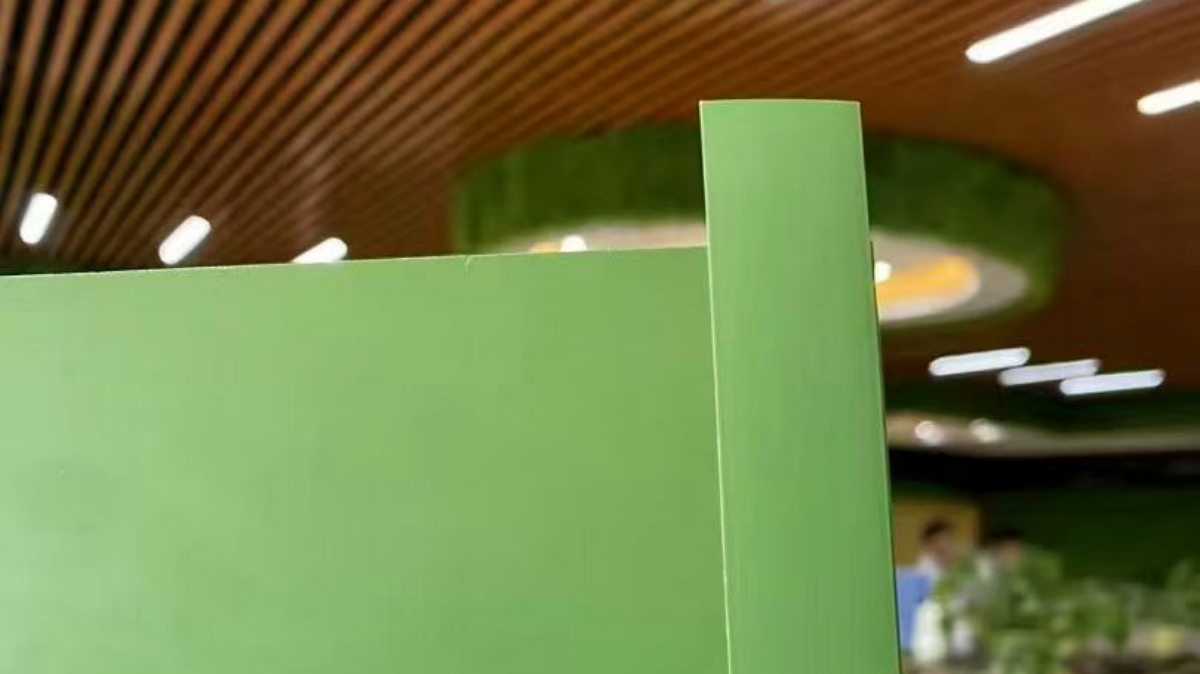
The width of the edge banding should be chosen according to the panel size and furniture type. In most cases, it is recommended to select a width that is 2–3mm wider than the board thickness. This ensures proper trimming during processing and prevents the board material from being exposed after edge banding.
Length per Roll
Standard edge banding roll lengths are typically 100 meters or 200 meters. However, the final length can be customized based on the customer’s production requirements and usage habits.
Customized Specifications
Width, thickness, and length can all be fully customized according to customer requirements. Before shipment, we strictly re-check each production batch to ensure specification accuracy and avoid any manufacturing errors.

Conclusion
In summary, precise matching of color, texture, and specifications is the most important step in ensuring perfect edge banding results. This process requires strong technical expertise and strict quality control from a professional edge banding manufacturer.
If you are looking for high-quality edge banding strips for your furniture production, you can contact Shengmei Edge Banding Supplier from China. We provide accurate color matching, texture matching, and customized specifications according to your project requirements.